ISO 15118 Deep Dive: Defining the New Global Standard for EV Charging
2025年12月16日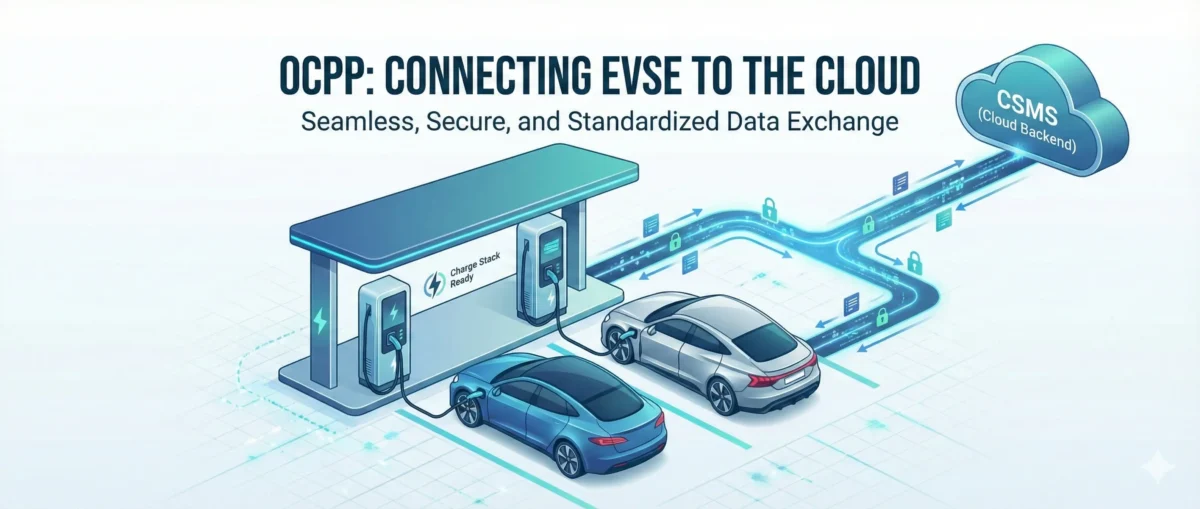
The Complete Guide to OCPP: Versions 1.6, 2.0.1, & 2.1
Discover how OCPP enables seamless connectivity, secure authentication, and future-readiness for EV charging, building a smarter charging network.
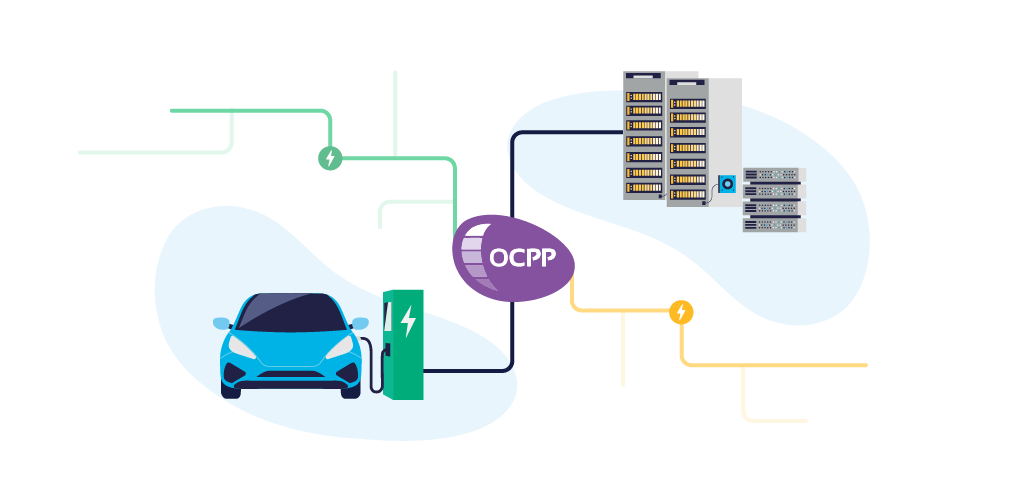
Table of Contents
- What is OCPP?
- OCPP Version Comparison
- Core Use Cases
- Technical Data Flow & Operation
- Future Outlook
What is OCPP?
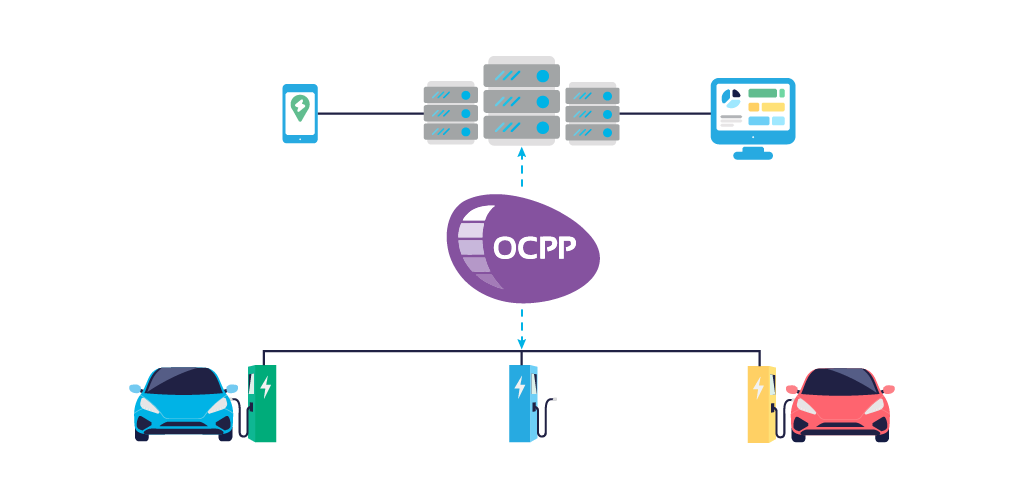
The Open Charge Point Protocol (OCPP) is an open communication standard designed for easy interaction between Electric Vehicle Supply Equipment (EVSE) and a Central Station Management System (CSMS).
For charging hardware manufacturers and software vendors, OCPP is vital. It eliminates proprietary barriers, allowing any compliant charger to connect with any management software globally.
History & Evolution
OCPP was originally published by ElaadNL (Dutch grid operator alliance) in 2009. In 2014, development was handed over to the Open Charge Alliance (OCA). Subsequently, OCPP 1.6 was adopted by OASIS, which had a profound impact on the unification of European and American charging standards.
| Year | Milestone |
|---|---|
| 2009 | First version released (OCPP 1.0) by ElaadNL |
| 2010-2012 | Release of OCPP 1.2 and 1.5 |
| 2014 | Open Charge Alliance (OCA) established |
| 2015 | Release of OCPP 1.6 (Industry Benchmark) |
| 2018 | Release of OCPP 2.0 |
| 2020 | Release of OCPP 2.0.1 (Security & PnC Enhancements) |
| 2024 | OCPP 2.0.1 officially recognized as an international standard (IEC 63584) |
| 2025 | Release of OCPP 2.1 (V2G Bidirectional Charging) |
Deep Dive: OCPP Version Comparison
Which version should your charging network choose? Here are the key feature differences:
| Feature | OCPP 1.6 (J/S) | OCPP 2.0.1 | OCPP 2.1 |
|---|---|---|---|
| Release Year | 2015 | 2020 | 2025 |
| Security | Basic TLS, no mandatory validation | High: Certificate-based auth, secure firmware updates | Very High: Advanced cryptographic policies |
| Smart Charging | Basic Load Balancing | Dynamic Smart Charging, Energy Optimization | V2G Support (Vehicle-to-Grid) |
| ISO 15118 | Not Supported (Requires Customization) | Native PnC (Plug & Charge) Support | Full ISO 15118-20 Support |
| Device Management | Limited status monitoring | Full device model & remote diagnostics | Real-time telemetry & component-level monitoring |
| Transaction Handling | Simple kWh billing | Flexible transaction mechanisms | Offline/Post-interruption transaction recovery |
| Communication Efficiency | - | WebSocket data compression | WebSocket data compression |
| User Interface | Basic session handling | Screen messages, multi-language support | Advanced notifications, real-time cost tracking |
| Distributed Energy (DER) | Not supported | Partially supported | Integrated control (IEEE 2030.5) |
| Battery Swapping | Not supported | Not supported | Native battery swap station integration |
| Market Status | Widely Used | Rapid Adoption (Standard in EU/US) | Future Standard |
OCPP 1.6 (J)
Currently the most widely adopted standard globally. Divided into SOAP-based 1.6S and JSON WebSocket-based 1.6J. Supports basic remote start, stop, and firmware updates.
OCPP 2.0.1
Born to address the limitations of 1.6. It introduces device management features, significantly improves security (fixing vulnerabilities in older versions), and natively supports ISO 15118 Plug & Charge functionality. Additionally, it introduces unified TransactionEvent messaging and WebSocket data compression to improve communication efficiency.
OCPP 2.1
The upcoming standard, with a core focus on supporting bidirectional charging (V2G). It allows electric vehicles to feed power back into the grid, serving not just as transportation but as distributed energy storage units. It also supports prepaid cards, ad hoc payments (credit/debit terminals), and dynamic QR codes.
💡 The Technical Leap Challenge: Upgrading from OCPP 1.6 to 2.0.1 requires refactoring low-level code. The Charge Bridge Module features a built-in full-stack protocol engine, covering OCPP 1.6J, 2.0.1, and ISO 15118 in a single module, helping you seamlessly bridge the technical generation gap.
Core Use Cases
The OCPP protocol primarily supports the following core business scenarios:
- Authorize charging sessions
- Billing and payment processing
- Grid load management
- Charge point operation and monitoring
- Reservation and scheduling
- Smart charging optimization
How Does OCPP Work? (Technical Data Flow)
OCPP enables secure communication between the charging station and backend systems. Below is a typical technical data interaction flow:
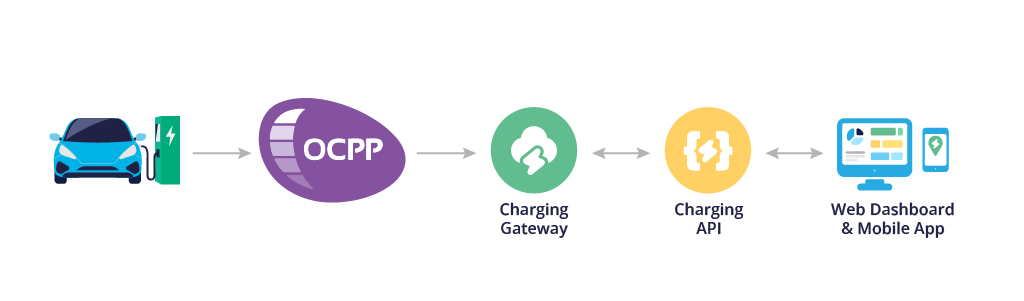
Key Data Flow Explanation:
- Charging Station: Initiates connection, sends commands like
StartTransaction,StopTransaction,MeterValues, andStatusNotification; OCPP 2.0.1 and later use the unifiedTransactionEventmessage. - Charging Gateway: Acts as an intermediary, ensuring the stability and security of WebSocket connections.
- Charging API: Processes data from the gateway and converts it into business logic for upper-layer applications.
- Management Panel & Mobile App: The end-user interface for monitoring status or initiating controls.
The Full EV Charging Process
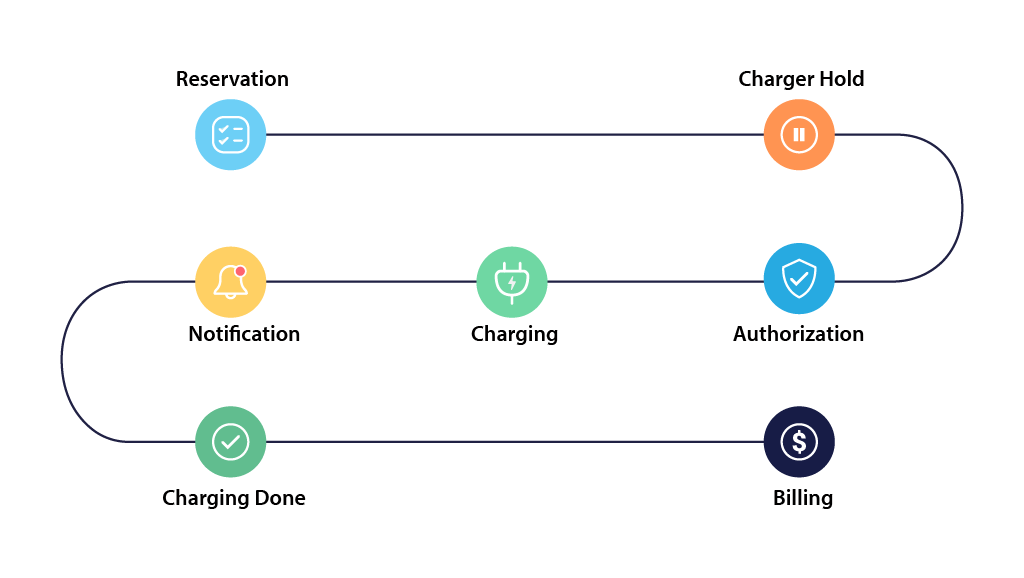
- Reservation/Plug-in: The driver books via App or plugs in directly.
- Authentication: System verifies the user via RFID, QR Code, or ISO 15118 (PnC).
- Command Authorization: After CMS verification, charging permission is sent.
- Charging in Progress: Relays close, energy is transferred, and the pile reports real-time data.
- Settlement Complete: Charging ends, a bill is generated and pushed to the user's phone.
How to Connect?
Modern OCPP chargers typically communicate via WebSocket over TCP/IP. Compared to older HTTP polling, WebSockets support bidirectional real-time communication with lower latency.
- Requirement: A secure TLS tunnel must be established, using a certificate-based authentication mechanism.
Future Outlook
With the development of the Energy Internet, the demand for OCPP continues to grow. It is not just a charging protocol, but the cornerstone of a sustainable energy network.
Charge Stack Studio is dedicated to simplifying standard implementation. With the Charge Bridge Hardware Module, your devices become instantly OCPP 2.1 Ready and ISO 15118-20 capable. No R&D reinvention required—quickly pass European/US CTEP/PTB certifications and seize the global market initiative.