ISO 15118 Deep Dive: Defining the New Global Standard for EV Charging
2025年12月16日
Plug & Charge Deep Dive: Simplifying the EV Charging Experience
2025年12月17日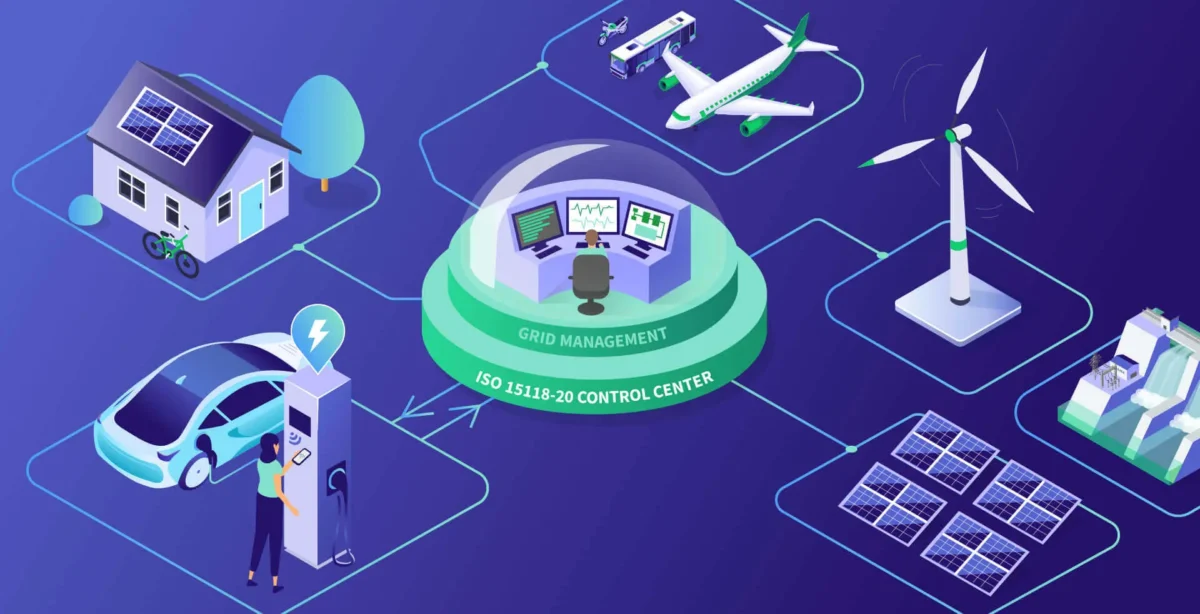
ISO 15118-20 Deep Dive: Unlocking a New Era of V2G and Smart Charging
The latest core evolution of the ISO 15118 communication standard series—ISO 15118-20—has arrived!
ISO 15118-20 is the newest member of the ISO 15118 standard family, establishing a future-proof communication foundation for electric vehicle (EV) charging. The ISO/IEC Joint Working Group began developing this standard at the end of 2015, focusing on introducing disruptive new functionalities that could not be included in earlier ISO 15118-2 versions. Furthermore, the new standard thoroughly resolves the technical limitations identified by various vendors during the implementation of ISO 15118-2.
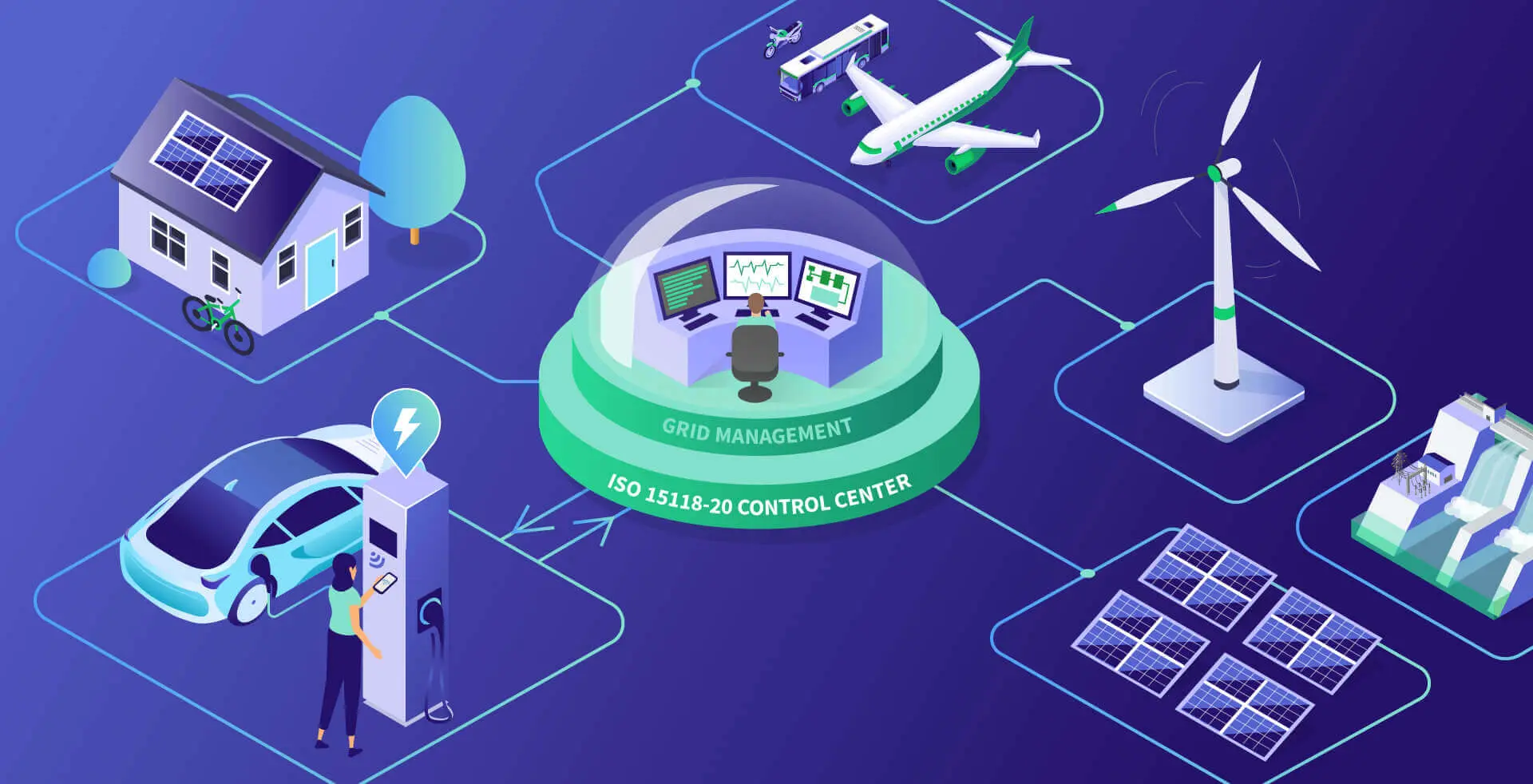
The grand vision of ISO 15118-20 is to become a universal standard serving all use cases. It supports the full range of electric mobility, whether passenger cars, motorbikes, trucks, buses, or even ships and airplanes. Yes, you read that right—the electrification of the aviation sector is also within its scope.
Looking back at previous iterations, ISO 15118-2 primarily defined the message mechanisms exchanged between an EV and a charging station to control AC and DC charging sessions. Additionally, that standard laid the groundwork for smart charging features and introduced the highly user-friendly and secure Plug & Charge functionality.
As a significant expansion of ISO 15118-2, ISO 15118-20 adds support for Wireless Power Transfer (WPT). Moreover, whether it is AC, DC, or wireless charging, all can be deeply integrated with Bi-directional Power Transfer (BPT, i.e., V2G) and Automated Connection Devices (ACD). We will explain these game-changing features in detail below.
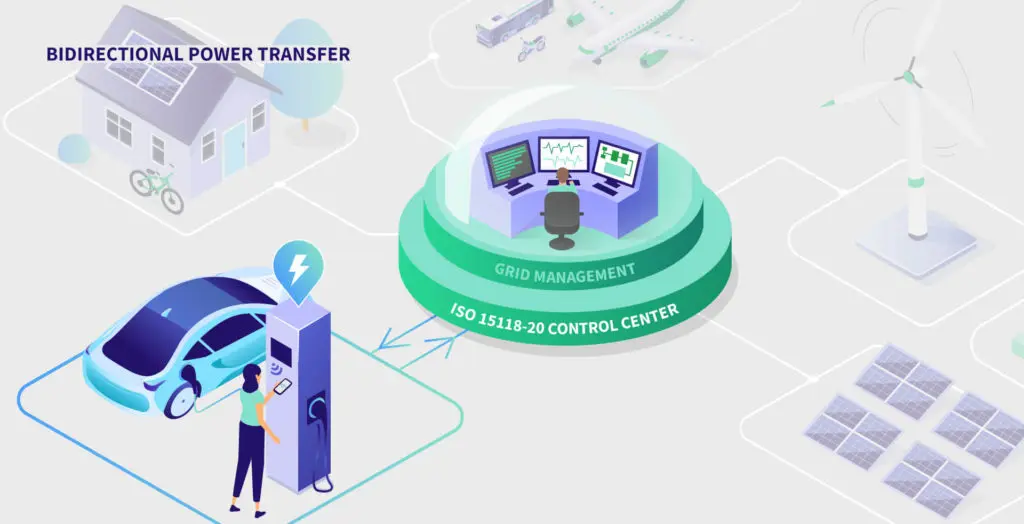
Bi-directional Power Transfer (BPT, i.e., V2G)
The core concept behind Vehicle-to-Grid (V2G) is that when an EV is connected to a charging station, it can feed part of the energy from its traction battery back into the grid based on grid load or user strategies. This concept can be traced back to Willet Kempton (often considered the father of V2G) and his first V2G paper published in 2001, "Vehicle-to-Grid Power: Battery, Hybrid, and Fuel Cell Vehicles as Distributed Energy Resources for California."
As you can see, V2G is not a totally new concept; academic and industrial exploration of this topic spans nearly two decades. Today, with the explosive growth in EV penetration and the significant global increase in intermittent renewable energy sources like wind and solar, the industry is finally embracing the perfect opportunity to commercialize V2G on a large scale.
In recent years, not only have technologies like the "million-mile batteries" introduced by Tesla and General Motors greatly alleviated concerns about battery degradation, but reports also indicate that automakers are secretly pre-installing V2G capabilities in their underlying hardware. These positive industry signals indicate that the widespread application of V2G is just around the corner.
In terms of technical implementation, ISO 15118-20 precisely defines the operational logic of reverse power transfer (BPT) systems by introducing two new parameters: BPTChannel and GeneratorMode:
- BPTChannel: This parameter distinguishes between single-channel and dual-channel architectures. The former uses a single smart meter for bidirectional energy flow metering; the latter uses two independent meters to measure energy flowing in and out separately, with the system precisely switching via physical switches depending on the current direction.
- GeneratorMode: This parameter indicates whether the system (EV + Supply Equipment) operates as a "Grid-Following Generator" (injecting only active and reactive power) or a "Grid-Forming Generator" (possessing the capability to regulate the voltage and frequency of the microgrid).
Combining AC, DC, and Wireless (WPT) transfer modes with Bi-directional Power Transfer (BPT) and the use of Automated Connection Devices (ACD), ISO 15118-20 currently defines a rich array of 12 possible service modes for the industry:
AC, DC, WPT, AC_ACD, DC_ACD, WPT_ACD, AC_BPT, DC_BPT, WPT_BPT, AC_ACD_BPT, DC_ACD_BPT, WPT_ACD_BPT.
Automated Connection Device (ACD)
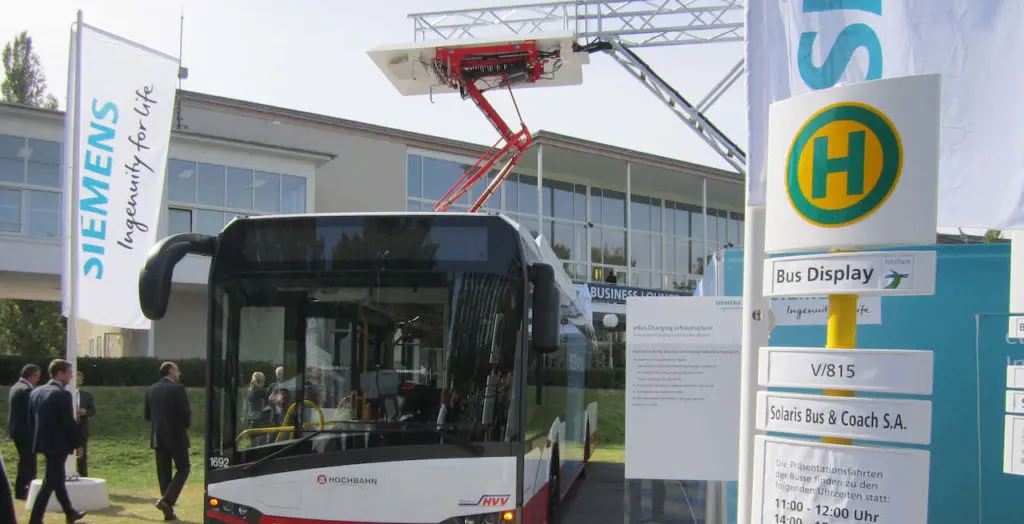
ISO 15118-20 defines an ACD as "an assembly capable of supporting an automated connection and disconnection process for conductive energy transfer between an EV and an EVSE." Simply put, it automates the physical plugging and unplugging process.
A typical implementation scenario for ACDs is charging electric heavy-duty trucks and buses using a Pantograph. This is a mechanical device mounted on the roof of the vehicle that rises to make contact with overhead lines at the charging station to receive high-power electricity. In fact, pantograph charging was one of the first use cases detailed in ISO 15118-20, with industry giants like Siemens deeply involved in drafting the relevant technical requirements.
Wireless Power Transfer (WPT)
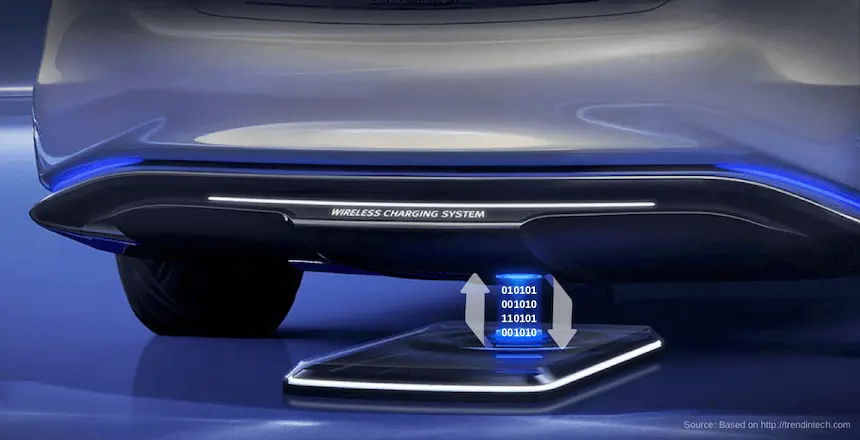
Wireless charging pushes the convenience of vehicle energy replenishment to the extreme. Imagine simply parking your EV over a ground charging pad; the vehicle automatically initiates a secure handshake with the ground equipment. The system guides you to micro-adjust your parking position for maximum electromagnetic transfer efficiency and silently starts the charging process. The entire process requires zero human contact with cables. This will elevate the user experience of "Plug & Charge" to an entirely new height.
Regarding WPT system standard coordination, the IEC 61980 standard series is responsible for defining the "General requirements" at the physical hardware layer (IEC 61980-1) and the lower-layer communication requirements (IEC 61980-2). For high-level application data exchange, IEC 61980-2 directly references the ISO 15118-20 specifications, ensuring standardized mutual recognition of wireless communication data between the EV and infrastructure.
Dynamic Mode (For Ancillary Services)
In addition to the "Scheduled" mode already maturely applied in ISO 15118-2, ISO 15118-20 introduces a highly flexible "Dynamic" control mode. There is a fundamental difference in the transfer of control authority between these two modes:
- Scheduled Mode: The core control lies with the EV. The EV and the charging station negotiate based on tariff tables and power limits exchanged during the handshake phase. The EV is responsible for calculating the optimal charging profile that meets the owner's mobility needs (e.g., target SOC, expected departure time) while strictly adhering to the charging station's physical power boundaries.
- Dynamic Mode: Core control is fully delegated to the off-board system (i.e., the charging station or its backend operating platform), eliminating the need for complex negotiation processes. Although the EV still uploads basic parameters, in this mode, the charging station directly issues hard power setpoints to the EV without providing forecast schedules or tiered pricing, and the EV must unconditionally execute these commands. When adopting this mode, the off-board system bears full responsibility for ensuring the owner's final energy needs are met. The addition of Dynamic Mode enables charging systems to achieve millisecond-level fast responses, which is crucial for providing ancillary services like microgrid frequency regulation.
Multiplexed Communication
Beyond the traditional linear handshake process, ISO 15118-20 revolutionarily introduces a multiplexed communication mechanism. Utilizing new payload types, it allows for the parallel processing of certain critical asynchronous messages outside the strictly predefined main message flow (state machine).
These parallel messages primarily serve: seamless renegotiation of active services (e.g., smoothly switching from charging to discharging mode), handling ACD system status, real-time exchange of metering data, or parking alignment assistance data.
Taking DC charging as an example, during the continuous exchange of DC_ChargeLoop messages, if the system detects the need to adjust the charging profile configuration, it can trigger renegotiation in the background via the multiplexing mechanism. This eliminates the pain point found in ISO 15118-2, where the current charging process had to be interrupted and contactors disconnected to reload parameters, thereby achieving truly "seamless adjustment."
Enhanced Data Security
Within the ISO 15118 architecture, the information security defense system spans both the transport and application layers. Transport Layer Security (TLS) protocols build encrypted channels, while the application layer relies on XML-based digital signatures and robust X.509v3 certificates to prevent data tampering and identity forgery.
In earlier versions of ISO 15118-2, TLS encryption was only mandatory when using "Plug & Charge" (PnC). For scenarios using RFID cards or App scanning (i.e., EIM - External Identification Means), TLS was surprisingly optional. From a modern cybersecurity perspective, unencrypted plaintext communication poses immense risks of sniffing and man-in-the-middle attacks.
Fortunately, under the ISO 15118-20 standard, regardless of the use case or identification mechanism, TLS (with TLS 1.3 highly recommended for superior performance and security) is now a mandatory standard. This completely seals the cybersecurity loopholes of the V2G era.
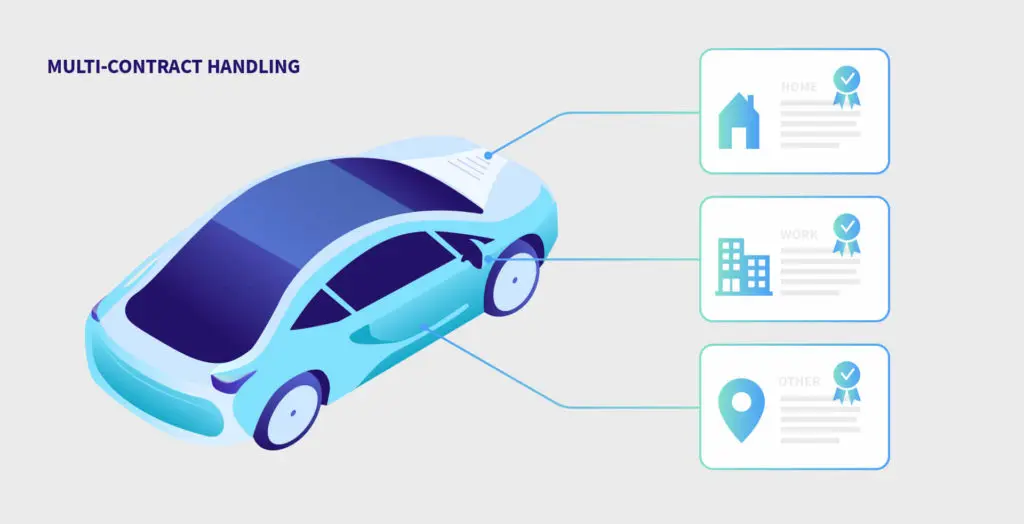
Simpler Multi-Contract Handling
Initially, ISO 15118-2 assumed that an EV would be bound to a single contract certificate as its sole authentication credential. However, as business models matured, standard bodies realized the severe limitations of this "one-card-fits-all" assumption.
Adapting to market demands, ISO 15118-20 has established clear standards for the installation and concurrent management of multiple contract certificates. Now, EV owners can easily configure settings directly from the vehicle: for instance, automatically utilizing an enterprise-contracted (free) certificate for billing when plugging in at the company garage, and seamlessly switching to a personal contract for settlement when plugging into their private home charger after work.
The Official Release of ISO 15118-20
After years of meticulous refinement and rigorous testing, ISO 15118-20 was officially published by the International Organization for Standardization (ISO) in April 2022 (official standard designation: ISO 15118-20:2022).
Although the industry initially anticipated a 2020 release, the standardization body (ISO/TC 22/SC 31) invested additional time to ensure the robustness of massive paradigm shifts—such as Bi-directional Power Transfer (V2G), Wireless Power Transfer (WPT), dynamic control modes, and mandatory TLS encryption. This dedication to technical rigor involved extensive cross-border interoperability testing and multiple rounds of draft reviews. Today, ISO 15118-20 has left the "draft era" far behind; it is now the mature, globally recognized, and active standard that leading automakers and top-tier EVSE manufacturers are actively deploying and integrating.
Underlying Logic: Incompatibility Between ISO 15118-2 and ISO 15118-20
It must be pointed out that although ISO 15118-20 sounds like a smooth evolution of ISO 15118-2, due to the complete reconstruction of the underlying architecture, they are incompatible with each other at the communication protocol level. This means that a charging station running a pure ISO 15118-20 protocol stack cannot complete a communication handshake with an older EV that only supports ISO 15118-2, and vice versa.
There is an insurmountable gap between the two versions: from completely changed message names, significantly increased new data structures, and entirely new multiplexed messages, to state machine sequences that redefine the underlying logic—it is practically a rewrite of the code-level specifications. Consequently, the XML Schema Definition (XSD) files used for encoding and decoding have also been entirely transformed.
However, this doesn't mean your previous R&D investments are wasted. At the hardware Supply Equipment Communication Controller (SECC) level, the underlying requirements remain stable—you still need a mature Power Line Communication (PLC) modem chip compatible with the HomePlug Green PHY protocol to implement physical layer carrier communication.
⚡️ Charge Bridge: Masking Standard Differences, Accelerating Deployment
Facing the code-level incompatibility between ISO 15118-2 and -20, along with the computational challenges brought by underlying TLS and XML encryption/decryption, the risks and development cycles of building a new protocol stack from scratch increase exponentially.
Charge Stack Studio's Charge Bridge Hardware Module, through underlying architectural innovation, perfectly achieves downward compatibility and seamless switching between both ISO 15118-2 and ISO 15118-20 standards. A single module not only robustly supports the current mainstream demands of charging station enterprises but also encapsulates the complex capabilities of ISO 15118-20 (like V2G and multiplexing) into minimalist interfaces. No matter how automakers' standards evolve, Charge Bridge helps your EVSE achieve "integrate once, worry-free for a decade," allowing you to confidently step into the V2G era of the IoT.